
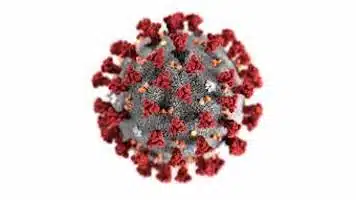
CAN INDUSTRIAL HYGIENE AIR SAMPLING BE PERFORMED FOR COVID-19?
Updated Point-of-View and Recommendations as of Sept 2020:
[Excerpt] Based on the most current research available for air sampling of the coronavirus called SARS-CoV-2, commonly known as COVID-19, a limited number of methods have proven to be effective in capturing positive results. The National Institute of Occupational Health and Safety (NIOSH) has reviewed various filters for sampling airborne pathogens and recommended the use of PTFE for immunological assays and polymerase chain reaction (PCR). This is mostly due to PTFE filter structure, which does not interfere with biochemical tests and the target viruses, and hence can be easily eluted from the membrane (Lindsley et al., 2017). It should be noted that many of the studies performed have been in hospital settings with known viral loads present, and the most prevalent non-viable sampling with positive results has come from cassettes loaded with PTFE filter media.
Click images to download PDF of complete report:


Report from May 2020: Examining Methodologies Utilizing Sensidyne Air Sampling Pumps
Defining COVID-19
According to the Center for Disease Control and Prevention (CDC), the name of this new disease is coronavirus disease 2019, abbreviated as COVID-19. There are many types of human coronaviruses, including some that commonly cause mild upper-respiratory tract illnesses. However, COVID-19 is a new viral strain of coronavirus that has not previously been seen in humans.(1)
COVID-19 is caused by a coronavirus called SARS-CoV-2. Coronaviruses are a large family of viruses that are common in people and many different species of animals, including camels, cattle, cats, and bats. Rarely, animal coronaviruses can infect people and then spread between people. This occurred with MERS-CoV and SARS-CoV, and now with the virus that causes COVID-19.(2)
COVID-19 Viral Properties
The CDC characterizes the spread of COVID-19 as mainly from person to person, through respiratory droplets produced when an infected person coughs or sneezes. These droplets can land in the mouths or noses of people who are nearby or possibly be inhaled into the lungs. Spread is more likely when people are in close contact with one another (within about 6 feet). It may also spread when these airborne droplets settle on flat surfaces and then someone contacts this affected surface and subsequently touches their own mouth, nose, or eyes.
The virus that causes coronavirus disease 2019 (COVID-19) is stable for several hours to days in aerosols and on surfaces, according to a new study from National Institutes of Health, CDC, UCLA and Princeton University scientists in The New England Journal of Medicine.(3) The scientists found that severe acute respiratory syndrome coronavirus 2 (SARS-CoV-2) was detectable in aerosols for up to three hours, up to four hours on copper, up to 24 hours on cardboard and up to two to three days on plastic and stainless steel. The results provide key information about the stability of SARS-CoV-2, which causes COVID-19 disease, and suggests that people may acquire the virus through the air and after touching contaminated objects. The study information was widely shared during the past two weeks after the researchers placed the contents on a preprint server to quickly share their data with colleagues.
Air Sampling for COVID-19
Although no specific air sampling methods have been published for SARS-CoV-2 that causes COVID-19, scientific professionals can look to previous investigations of corona viruses such as SARS-CoV-1 and the general principles of evaluating biological contaminants. SARS-CoV-1 investigations focused on identifying environmental contamination in infected areas and the potential for transmission to adjacent areas. Sampling approaches included swab sampling of surfaces and air sampling followed by Polymerase Chain Reaction (PCR) analysis.(4)
Various sampling devices can be used to recover airborne viruses, and some are illustrated in the Tables below. The most common are liquid and solid impactors, as well as filters.(5) It should be noted that indoor air sampling for viruses is not a common practice due to the low levels present in those environments.
NOTE: Sensidyne recommends that prior to collecting any bioaerosol samples, you contact a qualified environmental microbiology laboratory and discuss the appropriate sampling, handling and transporting procedures, as well as availability of sample analysis.
The following tables include examples of methods, media and accessories used in air sampling for bioaerosol: PolyTetraFluoroEthylene (PTFE) filter, NIOSH cyclone sampler, and Andersen impactor.(6)
|
|||||||||||
| PTFE Filter | – Low‐volume air sampler
– Samples onto dry filter – Disposable cassette – Does not resolve particle size |
– Demonstrated efficiency in vitro and previously used in ferret model
– Compact, disposable, user‐friendly, commercially available, thus amenable for experimental and field use as well as multicenter studies |
– Clinical and environmental settings
– Ideal for RNA and infectivity detection – Avoid areas with extremely high relative humidity |
||||||||
| Sensidyne Pump |
GilAir Plus Personal Air Sampling Pump
|
||||||||||

|
|||||||||||
| NIOSH Cyclone Sampler |
– Low‐volume air sampler
– Samples into dry tubes and filter – Main instrument reusable (requires autoclaving) – Able to differentiate particle size in three ranges |
– One of the more widely used instruments for the collection of viral bioaerosols in clinical settings and simulations
– Compact and portable – Capable of size fractionation |
– Clinical and environmental settings
– Ideal for RNA and infectivity detection – Decontamination necessary between uses |
||||||||
| Sensidyne Pump |
Gilian 5000 Power Series Pump
|
||||||||||

|
|||||||||||
| Andersen Impactor | – Mid‐volume air sampler
– Samples onto media – Reusable (requires autoclaving) – Able to differentiate particles size, number and ranges depend on the number of stages used |
– Used for viral bioaerosol collection in both healthcare and agricultural settings
– Capable of size fractionation |
– Difficult with liquid in field settings
– Ideal for RNA detection in controlled settings – Avoid areas with high relative humidity |
||||||||
| Sensidyne Pump |
AirCon 2 Area Air Sampling Pump
|
||||||||||


