In the world of occupational health and environmental safety, selecting the right air sampling equipment is not just a technical task—it’s a critical decision that affects worker health, regulatory compliance, and operational efficiency. Whether you’re an industrial hygienist, safety manager, or consultant, you need a clear, reliable method for matching the right tool to the job.
At Sensidyne, we’ve developed a proven framework to guide you through the selection process. This blog walks through the six key questions to ask when choosing air sampling equipment. Let’s break it down.
What Is the Purpose of Your Sampling?
Before you even pick up a pump or a filter, you need to define why you’re sampling. Here are the most common drivers:
- Regulatory Compliance (8-hr TWA)
Most workplace exposure limits are based on 8-hour time-weighted averages. If you’re following OSHA, MSHA, or NIOSH methods, this is your starting point. The NIOSH Manual of Analytical Methods (NMAM) 4th or 5th Edition is your go-to reference.


- Engineering Controls Validation
Need to confirm the effectiveness of a control measure like a local exhaust system? Spot checks using a direct-read instrument like the Gilian Dustlight or a detector tube may be all you need. - Health-Based (IDLH or STEL)
If you’re monitoring peak exposures or environments that are immediately dangerous to life or health (IDLH), short-duration or real-time sampling is critical. You’ll need a direct-read device or a pump that can handle a 15-minute sampling window. - Environmental Regulations
For outdoor or ambient air monitoring, you’re likely looking at higher flow rates and region-specific methods. Pumps like the AirCon II may be required.
What Substance Are You Sampling?
This step is about substance identification. You’ll need to:
- List all airborne substances you plan to sample.
- Identify if they are gases, vapors, or particulates—or a combination.
- Refer to Safety Data Sheets (SDS) for brand-name chemicals when needed.
Different substances require different methods, media, and flow rates. Getting this wrong can lead to invalid data or lab rejections.
What Sampling and Analysis Method Will You Follow?
Once you know the substance, the next step is identifying the correct method to capture it. Most often, you’ll choose from:
- NIOSH or OSHA Analytical Methods
Be sure to check with your lab on which methods they support—they may prefer one method over another based on detection limits or instrumentation. - Direct-Read Instruments
These are great for screening or supplemental measurements. Follow manufacturer instructions closely—many are not valid for full-shift compliance samples. - Colorimetric Detector Tubes
Fast, simple, and good for peak sampling, but must be used correctly for reliable results.

What Sampling Configuration Is Required?
This is where things get more specific. Each sampling method comes with its own requirements, including:
- Filter Media
The right media—filters, tubes, liquids—must match the method and contaminant type. For instance, silica requires a cyclone with a filter cassette. - Flow Rate & Volume
Your method will list a required flow range and minimum sample volume. If the environment is dirty or dusty, you might choose a lower flow to avoid clogging. If time is limited, you may need to sample at the high end of the flow range. - Accessories
From tube holders to impingers to sample bags, the right accessory makes all the difference. Using the wrong configuration may result in missed contaminants or failed samples. - Split Sampling
Want to take two samples with one pump? With constant pressure adapters and manifolds, you can. For example, use one line for a filter and another for a sorbent tube—same pump, two sample types.
What Instrument Features Do You Need?
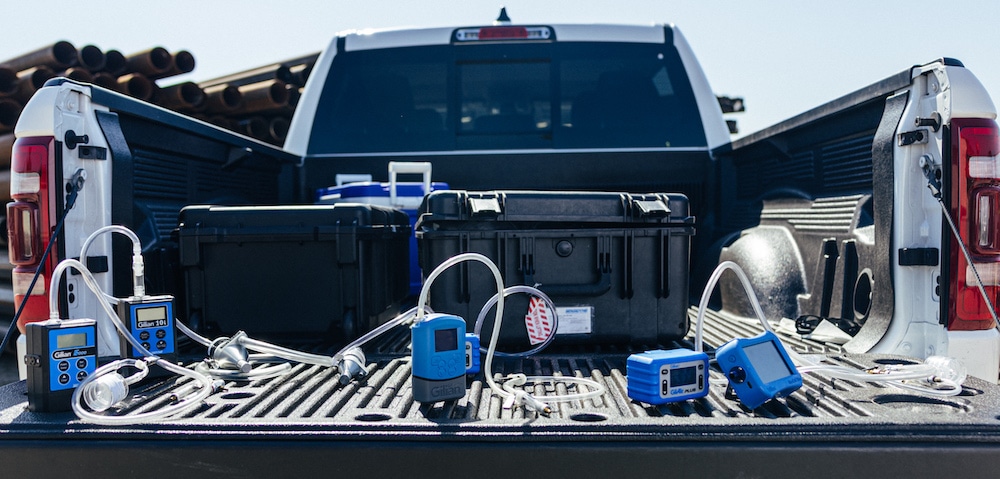
The right pump must do more than just turn on—it must meet the technical demands of your sampling method:
- Flow Range & Back Pressure
Each pump has a specific flow range. If your method calls for 3 LPM and your pump maxes out at 2 LPM, you’ve got a problem. Also consider back pressure. High-flow sampling or dirty filters increase resistance—choose a pump that won’t fault under load. - Constant Flow or Pressure Control
Pumps should maintain flow within ±5%. Higher-end models compensate automatically as filter resistance changes, while basic models may need manual adjustment. - User Interface
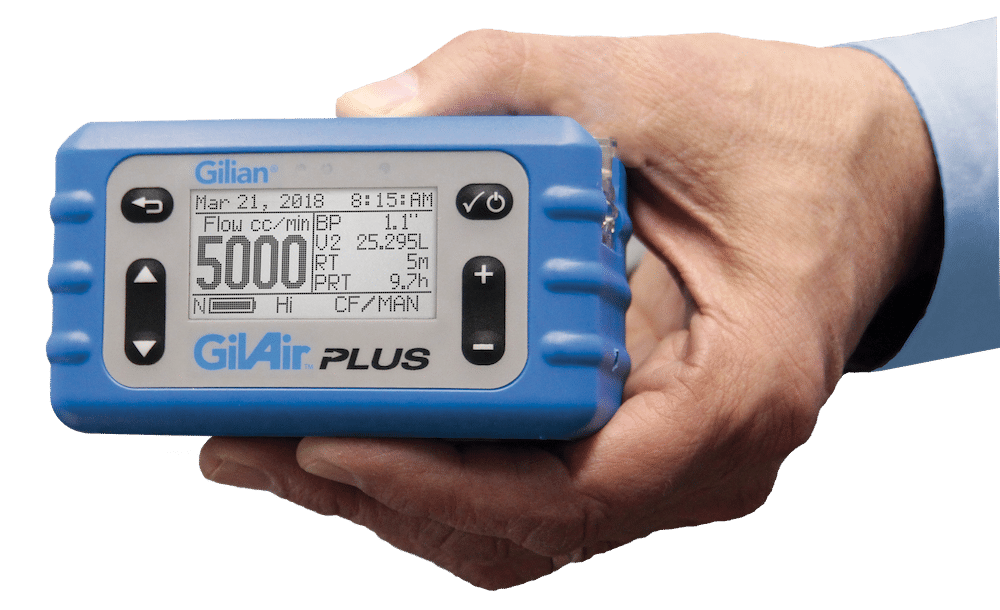
If you want something simple, models like the GilAir 3 or LFS-113 offer manual screw-based flow control. For more control and data, the Power Series (e.g., Gilian 5000) uses digital push-button control with a display for flow rate, time, and volume. - Advanced Features
For professionals looking for more automation and traceability:- Programmability for start/stop/delay
- Data Logging for easy reporting
- STP Compensation to correct air volume for temperature/pressure
- Motion Sensing for sample integrity
- Bluetooth for remote monitoring via mobile devices

What Calibration Device Matches Your Flow and Field Conditions?
Even the best pump is useless without accurate calibration. Choose a calibrator that matches your pump’s flow range:
- Volumetric Calibrators
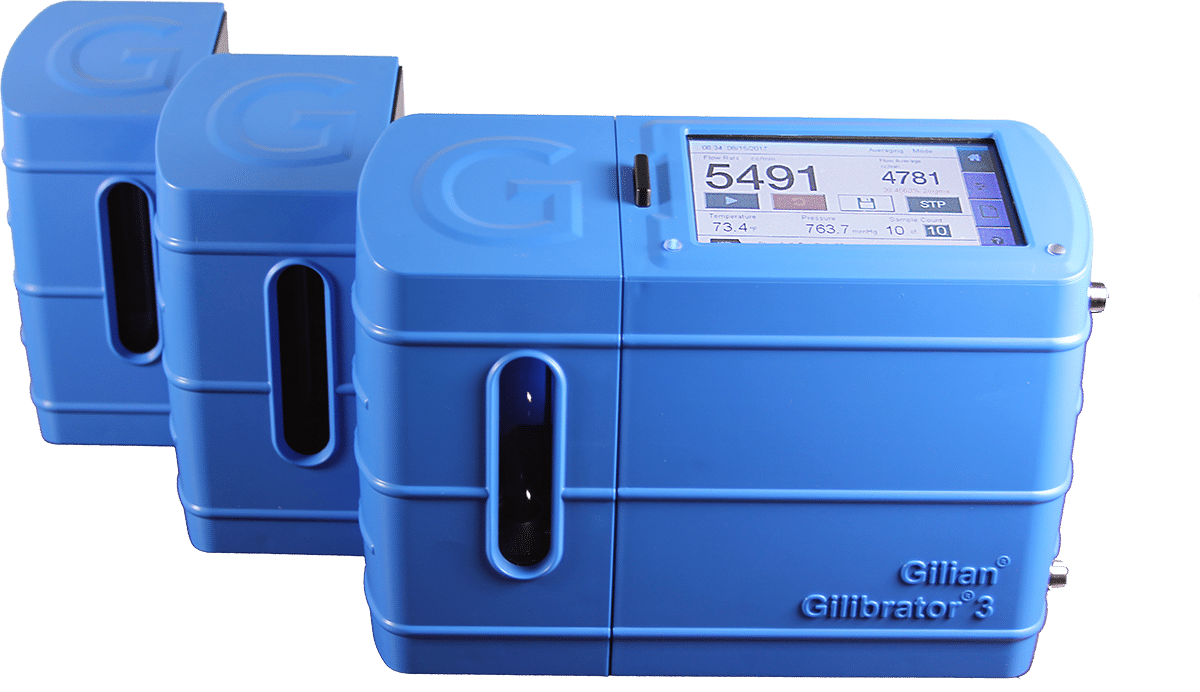
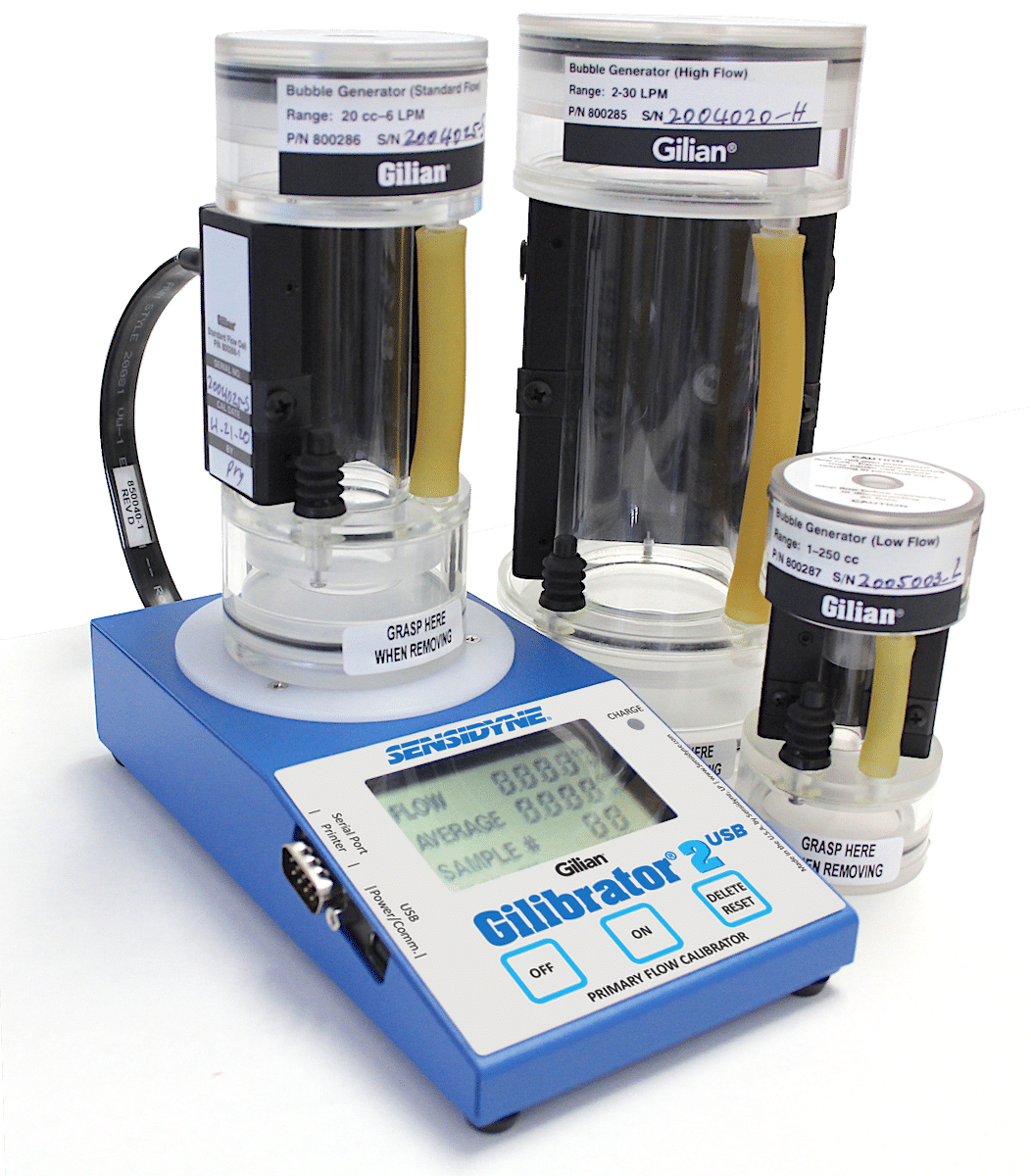
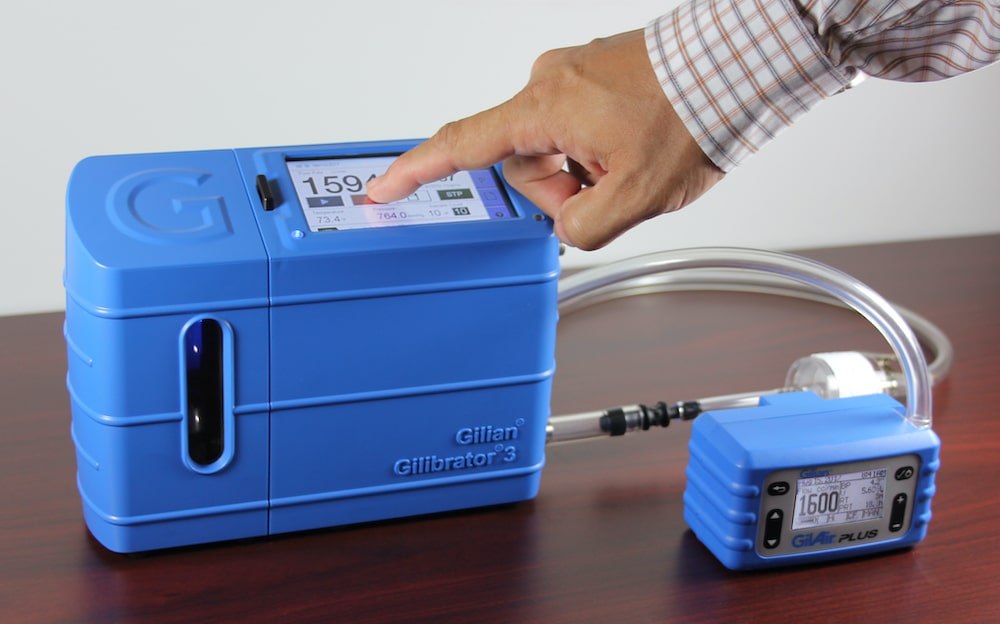
Ideal for bench setups, the Gilibrator 2 (wet cell) and Gilibrator 3 (dry cell) are precise, traceable standards. Best for lab or desktop use.
- Field Calibrators
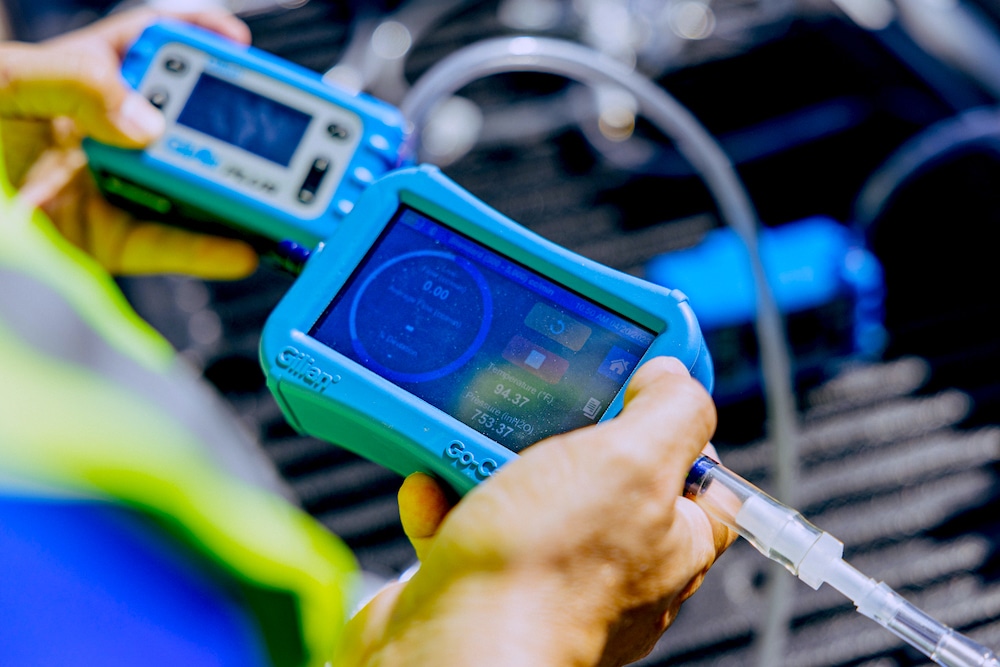
On the go? The Go-Cal Pro is a portable, battery-powered calibrator accurate within 1%—a perfect match for field use. If cost is a concern, rotameters are simple and cheap, but less accurate and non-traceable.
Final Thoughts: It’s About Fit, Not Just Features
Choosing the right air sampling equipment isn’t about grabbing the newest or most expensive model—it’s about finding the right fit for your specific application. The stakes are high: exposure data needs to be accurate, defensible, and aligned with your goals—whether regulatory, validation, or health-focused.
Sensidyne’s product line, including the Gilian and Go-Cal series, is engineered to meet the diverse needs of professionals working in industrial hygiene, environmental health, and safety compliance. If you’re unsure where to start, our team is here to help you walk through the decision tree and select the setup that makes the most sense for your operation.
Need help selecting the right pump or calibrator?
Contact us or reach out to your local distributor. We’ll help you get it right—so you can protect what matters most.
Aaron W. Apostolico, CIH, CSP, CIEC
Corporate Industrial Hygienist
Product & Applications Manager
Sensidyne, LP
1000 112th Circle North, Suite 100 | St. Petersburg, FL 33716 | U.S.A.
T: +1 727-530-3602 x 684
aapostolico@sensidyne.com
The information provided on this website is for general informational and educational purposes only, not to be construed as professional advice.