Gilian Silica Sampling Kits

NEW!  Pumps and Sample Trains for RCS Compliance Solutions

Product Description


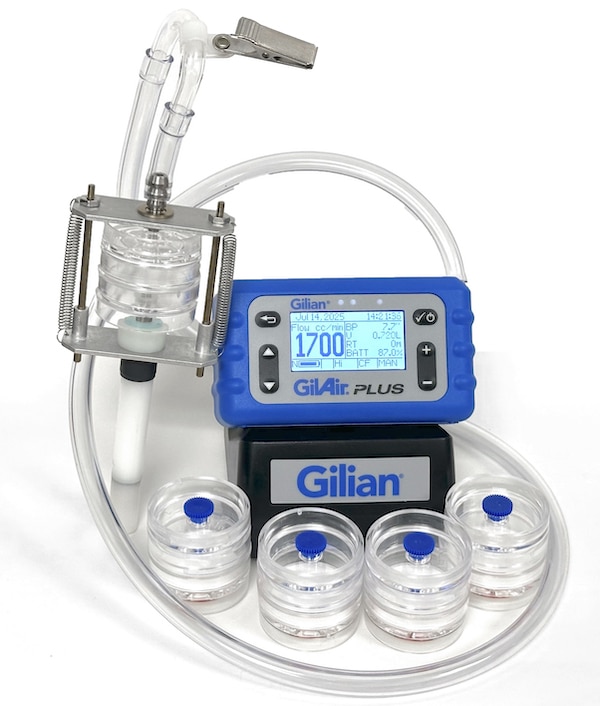
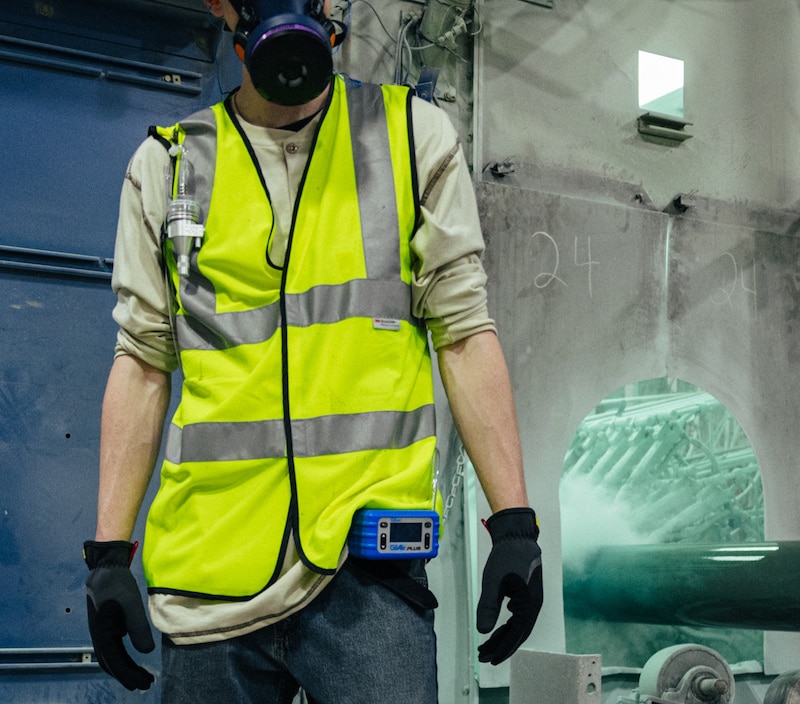
The new Gilian Silica Sampling Kits are purpose-built for industrial hygienists and safety managers needing streamlined, gravimetric compliance sampling for Respirable Crystalline Silica (RCS). Available in 3 configurations, each kit includes a Gilian sampling pump (GilAir 3 or GilAir Plus), pre-weighed filter media, and a size selection cyclone – designed to meet NMAM 7500/OSHA silica standards efficiently and accurately.

Gilian Silica Sampling Kits

Kit Pump & Features Cyclone/Sampler Filters Notes
Basic GilAir 3 Dorr Oliver
1.7LPM
Pre-weighed 37mm, 5.0 Micron, 3-pc., 5 filter cassettes >Calibration jar required, not included
   (P/N 7013376)
Standard GilAir Plus – includes clock and data logging Dorr Oliver
1.7LPM
Pre-weighed 37mm, 5.0 Micron, 3-pc., 5 filter cassettes >Calibration jar required, not included
   (P/N 7013376)
Advanced GilAir Plus – includes clock and data logging GK2.69 Cyclone
4.2LPM (Connects directly to calibrator, no calibration jar required)
Pre-weighed 37mm, 5.0 Micron, 3-pc., 5 filter cassettes >Both high and low dust environments  >Captures both thoracic & respirable particles  >Higher flow rate & more reliable results
Note: Air Flow Calibrator not included with any Kit

BASIC KIT

Part Number Description
910-2411-00UK-R Silica Kit, Basic, GilAir3, Dorr-Oliver Cyclone, UK Cord
910-2411-00EU-R Silica Kit, Basic, GilAir3, Dorr-Oliver Cyclone, EU Cord
910-2411-00US-R Silica Kit, Basic, GilAir3, Dorr-Oliver Cyclone, US Cord

STANDARD KIT

Part Number Description
910-2412-00US-R Silica Kit, Standard, GilAir Plus, Dorr-Oliver Cyclone, US Cord
910-2412-00EU-R Silica Kit, Standard, GilAir Plus, Dorr-Oliver Cyclone, EU Cord
910-2412-00UK-R Silica Kit, Standard, GilAir Plus, Dorr-Oliver Cyclone, UK Cord

ADVANCED KIT

Part Number Description
910-2413-00US-R Silica Kit, Advanced, GilAir Plus, GK2.69 Cyclone, US Cord
910-2413-00EU-R Silica Kit, Advanced, GilAir Plus, GK2.69 Cyclone, EU Cord
910-2413-00UK-R Silica Kit, Advanced, GilAir Plus, GK2.69 Cyclone, UK Cord

Common Applications for Respirable Silica Sampling

  1. Construction (General & Specialized Trades):

    • Why: This is arguably the largest and most diverse sector with significant silica exposure. Many common construction activities generate RCS.
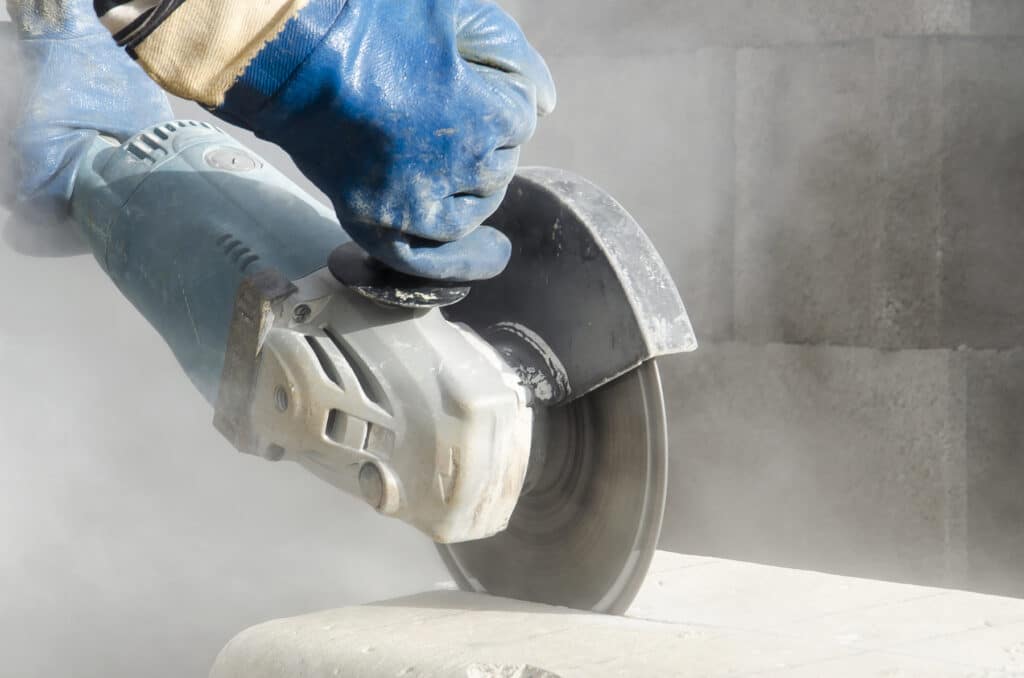
    • Specific Activities: Concrete cutting/drilling/grinding, masonry (brick/block cutting), stone countertop fabrication/installation, drywall finishing (some joint compounds), abrasive blasting (sandblasting, though sand is often restricted, alternatives can still contain silica), demolition, road construction, tunneling, tile cutting.
  1. Mining, Quarrying, and Oil & Gas Extraction (including Frac Sand):

    • Why: Directly involves excavating and processing silica-containing rock and sand. The rise of hydraulic fracturing (“fracking”) has significantly increased demand for silica sand, leading to more exposure risks in its mining, processing, and handling.
    • Specific Activities: Rock drilling, crushing, grinding, screening, bagging of silica sand, hydraulic fracturing sand handling, well site operations.
  2. Manufacturing (various sub-sectors):

    • Why: Many manufacturing processes use silica as a raw material or generate it as a byproduct.
    • Specific Sub-sectors & Activities:
      • Foundries: Casting molds are often made with silica sand (sand casting). Shakeout processes release significant dust.
      • Glass Manufacturing: Silica (sand) is a primary ingredient.
      • Ceramics, Pottery, Brick, and Clay Product Manufacturing: Raw materials contain silica. Cutting, grinding, and finishing processes.
      • Stone Product Manufacturing/Fabrication: Cutting, grinding, polishing natural and engineered stone (countertops, tiles, monuments). This overlaps with construction but also includes dedicated manufacturing facilities.
      • Abrasives Manufacturing: Some abrasive materials contain silica.
      • Paint and Coatings Manufacturing: Silica can be used as a filler.
  3. Maritime (Shipyards and Abrasive Blasting):

    • Why: Abrasive blasting for surface preparation (removing paint, rust from ship hulls) has historically used silica-containing abrasives and remains a high-risk activity, even when alternatives are used, due to the nature of the work in confined or semi-enclosed spaces.
    • Specific Activities: Abrasive blasting, sandblasting (even if “sand” is a misnomer for the current abrasive), surface preparation, shipyard safety.
  4. Dental Laboratories:

    • Why: Technicians in dental labs often grind, blast, and polish materials (like porcelain or investment materials) that contain silica to create crowns, bridges, and other dental prosthetics.
    • Specific Activities: Dental lab dust control, porcelain grinding, investment casting silica, dental technician safety.
  5. Agriculture (Less direct, but emerging awareness):

    • Why: While not always the first thought, tilling dry, silica-rich soils, especially in arid regions, can generate airborne silica dust. Handling certain agricultural products (e.g., diatomaceous earth, which is silica) can also pose a risk. This is a less traditionally targeted area but awareness is growing.
    • Focus Areas: Agricultural dust, soil silica, diatomaceous earth safety.

Pro Tips – 5 Common Mistakes in Sampling Respirable Crystalline Silica

  1. Failure to Calibrate the Cyclone Properly
    Before sampling, always calibrate the cyclone to ensure it is collecting respirable-sized particles accurately. Incorrect calibration can lead to invalid results that don’t reflect actual silica exposure.
  2. Ignoring Pump Back Pressure in Dusty Environments
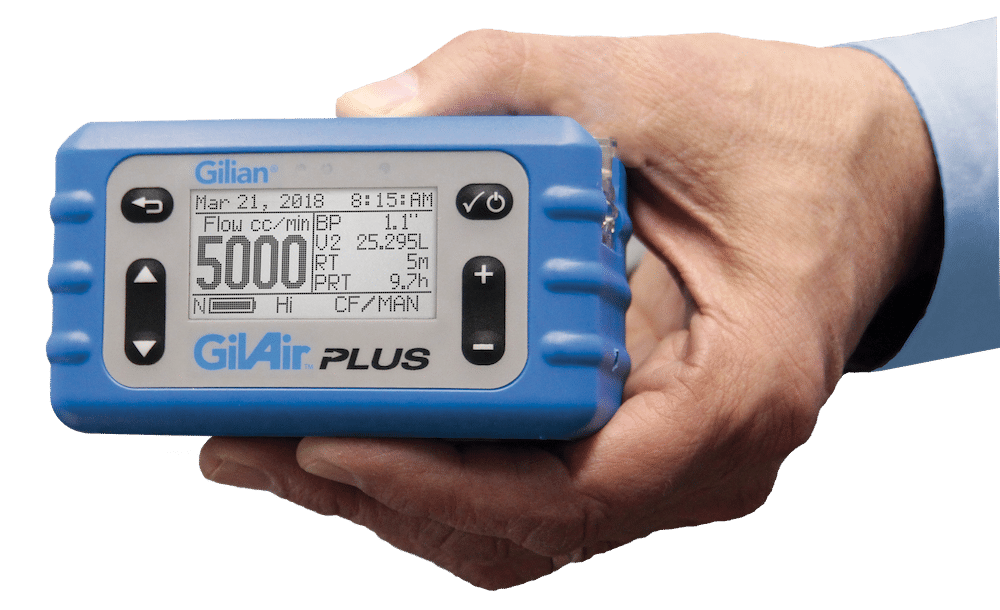
    In high-dust environments, monitor your sampling pump closely. For example, the Gilian GilAir Plus displays back pressure visually, while with the Gilian GilAir-3, you must listen for changes in sound. Failing to replace a clogged filter cassette in time may cause the pump to shut off or collect insufficient volume.
  3. Incorrect Positioning and Handling of the Cyclone
    The cyclone must remain vertically positioned throughout sampling to function correctly. When ending the sample, keep it vertically, carefully remove the filter cassette and seal it with end caps immediately to prevent contamination or loss of collected material.
  4. Using the Wrong Laboratory Analysis Method
    Selecting the correct analytical method is crucial. Gravimetric analysis provides only total dust mass and cannot differentiate crystalline silica. To measure respirable crystalline silica, use XRD (X-ray Diffraction) or FTIR (Fourier-Transform Infrared Spectroscopy) following NIOSH Methods 7500 or 7602.
  5. Incorrect Cyclone Flow Rate Calibration
    Always calibrate the cyclone at the flow rate recommended by the manufacturer (1.7 L/min for a Dorr-Oliver cyclone and 4.2L/min for GK 2.69 cyclone). Sampling at the wrong flow rate can result in inaccurate particle size separation, compromising data quality.


Contact our Experts

Reach out to Our Expert Team for Tailored 
Safety Solutions and Technical Guidance.

Resources and documents

File type:
All
Manuals (3)
Product Datasheets (2)

10 Things You Might Not Know – But Should – About Sampling for Respirable Silica

  1. Silica makes up 15% of the Earth’s crust and is found in materials like sand, granite, and concrete — meaning exposure risk exists on most construction and industrial job sites.
  2. OSHA limits workplace silica exposure to 50 μg/m³ over 8 hours. That’s 5 times lower than older construction limits — and many companies still aren’t measuring it accurately.
  3. Just 2 hours of jackhammering concrete can generate enough silica dust to exceed OSHA’s daily limit — validate controls and verify exposures with Gilian pumps and cyclones.
  4. Silica exposure doesn’t just cause silicosis. It’s also linked to lung cancer, COPD, and kidney disease. Accurate monitoring isn’t just about compliance — it’s about protecting lives.
  5. OSHA allows direct-reading instruments like Gilian® Dustlight that may be used to measure real-time respirable dust levels — giving you immediate insights to validate controls or isolate hot spots.
  6. To detect low-level silica exposures, you need to pull at least 816 liters of air in an 8-hour shift. That’s why flow rate and pump selection matter more than ever.
  7. A properly calibrated cyclone must match the ACGIH curve of 50% cut at 4 microns — or your sample data could be off. Flow rates matter.
  8. Some direct-read monitors (like Sensidyne’s Respicon™) collect inhalable, thoracic, and respirable fractions simultaneously — giving you both real-time and lab-grade data.
  9. OSHA’s Table 1 lets you skip exposure assessments — but only if you fully and correctly implement  and validate controls. Many companies overlook this and risk non-compliance.
  10. Sensidyne’s Gilian® pumps are built to handle high backpressure, so they won’t stall out mid-sample when you’re pulling air through loaded filters.
sensidyne

Get the latest news straight to your inbox

Join our subscribers list to get the latest news, updates and special offers delivered directly in your inbox